A Southern Gothic novel
Southern Gothic · Dark Romance · The Supernatural
Enter the beautifully dangerous worlds of K.S. Krown—where love becomes obsession, angels keep secrets, and no one leaves unchanged.
From the bookshelf
Standalone obsessions and a sweeping supernatural saga—each written from the edge of heaven and hell.
Also available free on Apple Books·Kobo·Google Play Books·Barnes & Noble
A Southern Gothic novel
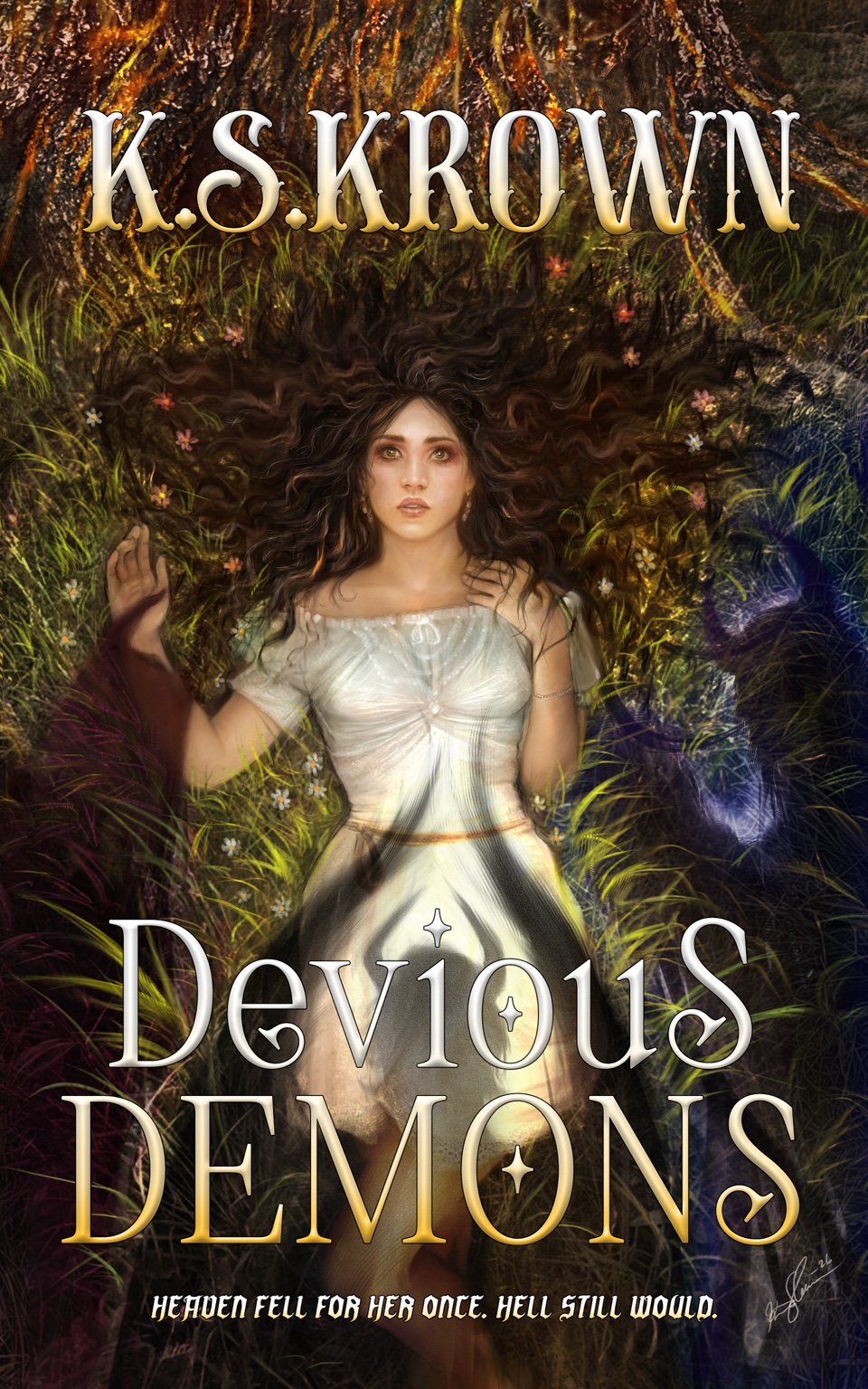
Devious Demons · Book One
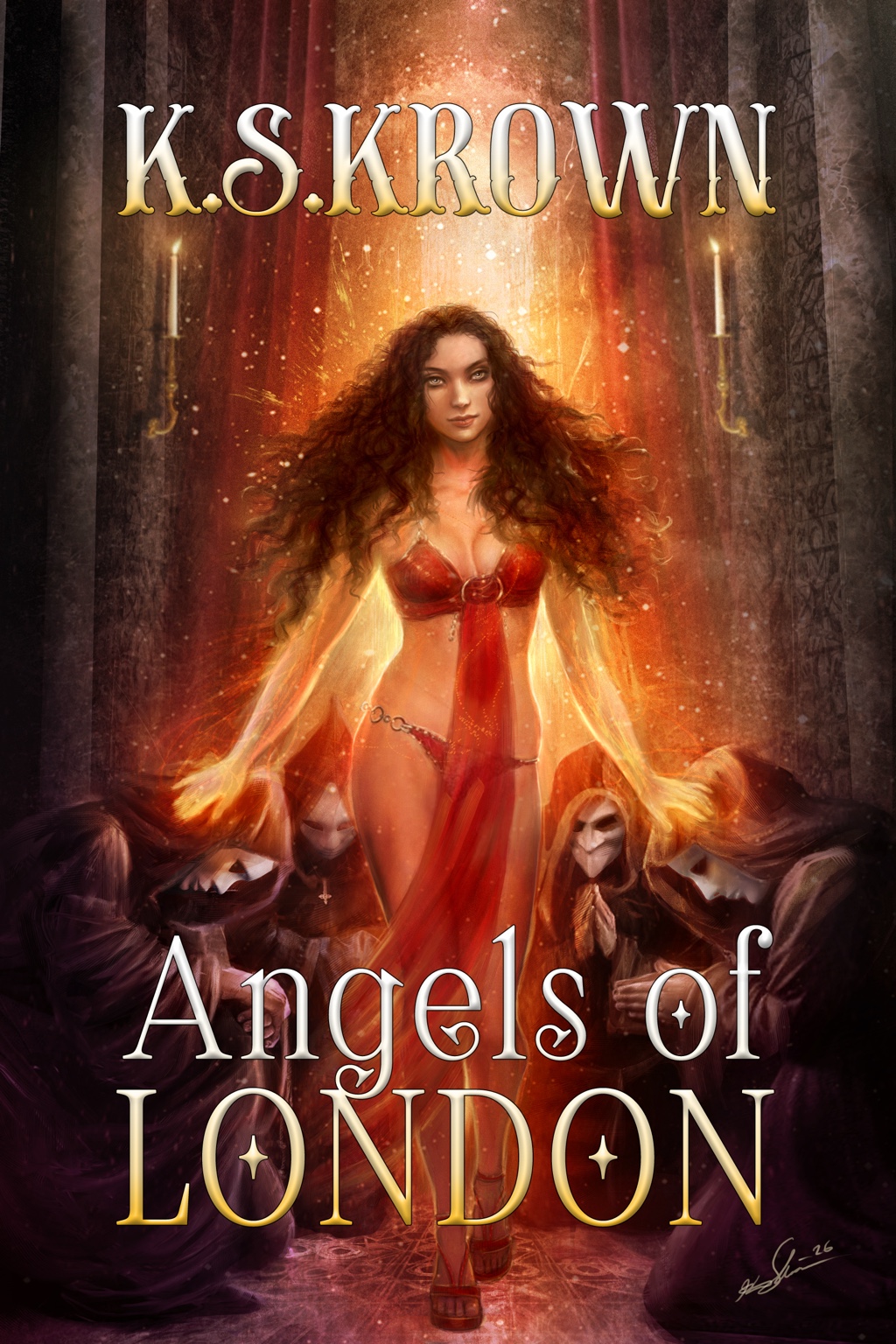
Devious Demons · Book Two
A novel of beautiful deceptions
Where to begin
Begin here
Continue the saga
The story deepens
The reckoning
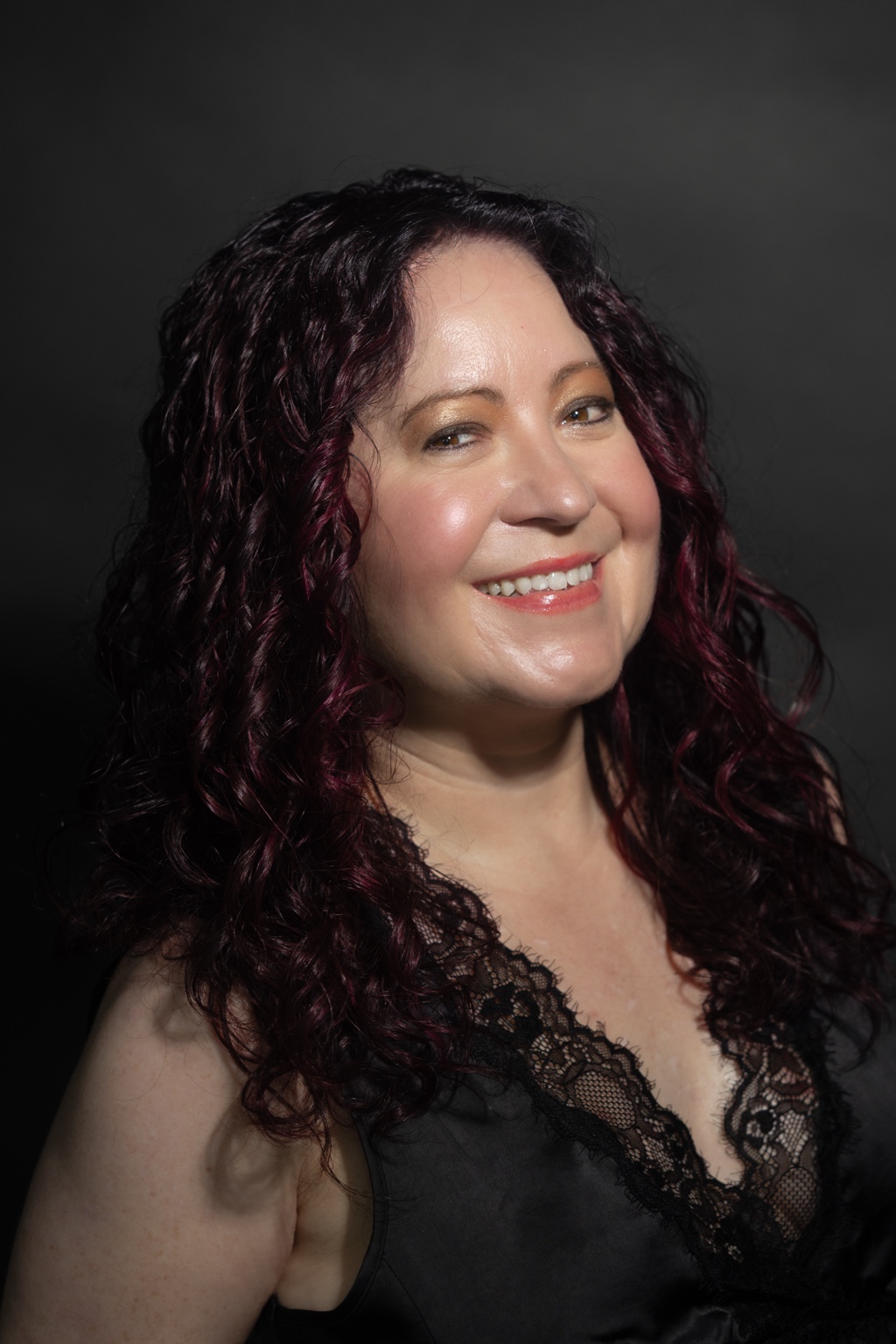
Photographed in Midtown Atlanta by Papillon Visuals, 2025.
Meet the author
K.S. Krown is an American novelist writing at the collision point of beauty and darkness, where love and ruin walk hand in hand. Moving between Southern Gothic, psychological suspense, dark romance, paranormal fantasy, and historical fiction, her work explores the fragile boundary between devotion and obsession, the mortal and the divine, and the relentless human pursuit of redemption.
Writing with the soul of a romantic and the mind of a philosopher, Krown gives voice to those caught between light and shadow—angels, lovers, sinners, and dreamers undone by their own desires. Her stories resist simple distinctions between heroes and villains. Instead, they ask what remains of us when love becomes possession, ambition becomes hunger, and salvation demands a price few are prepared to pay.
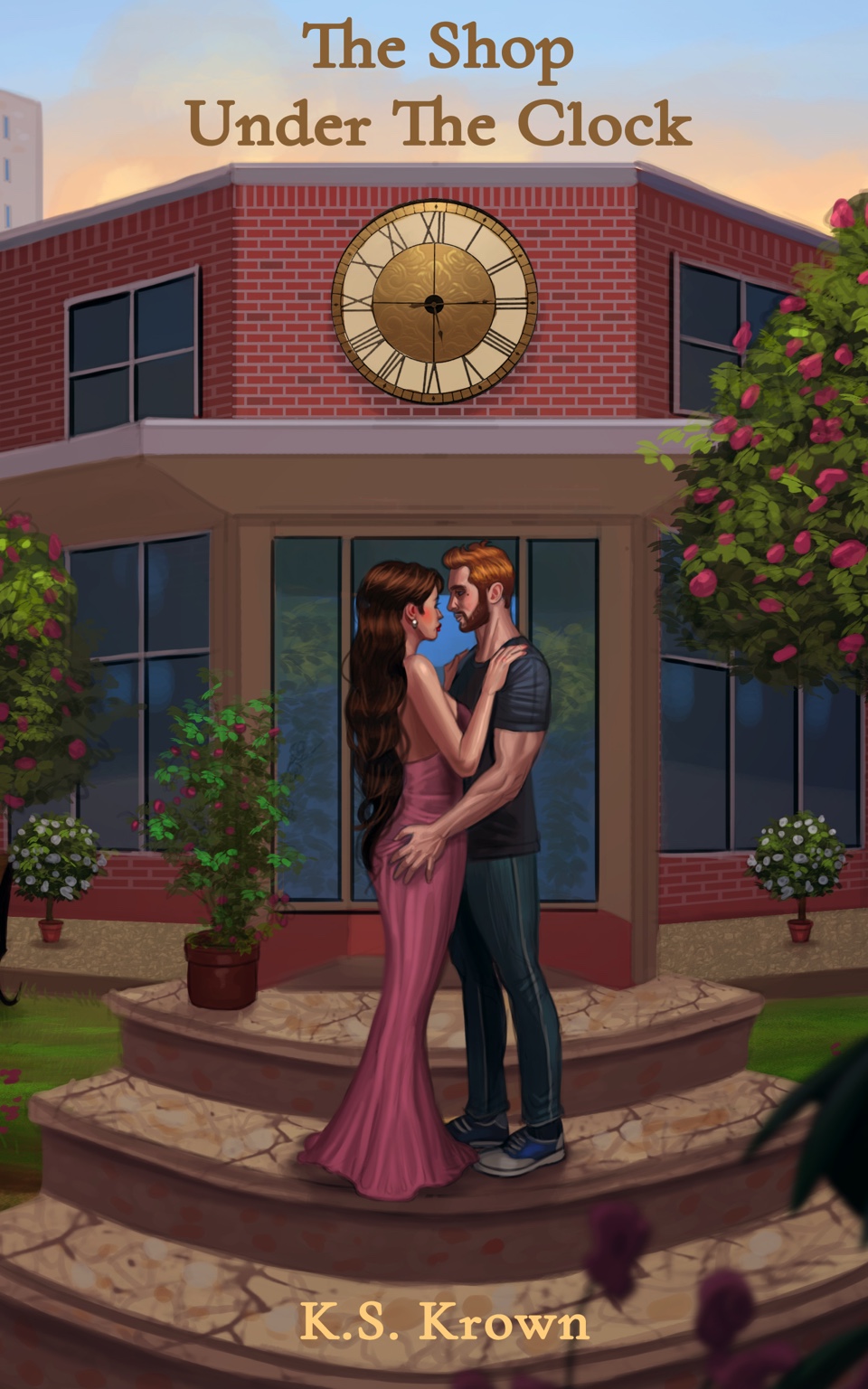
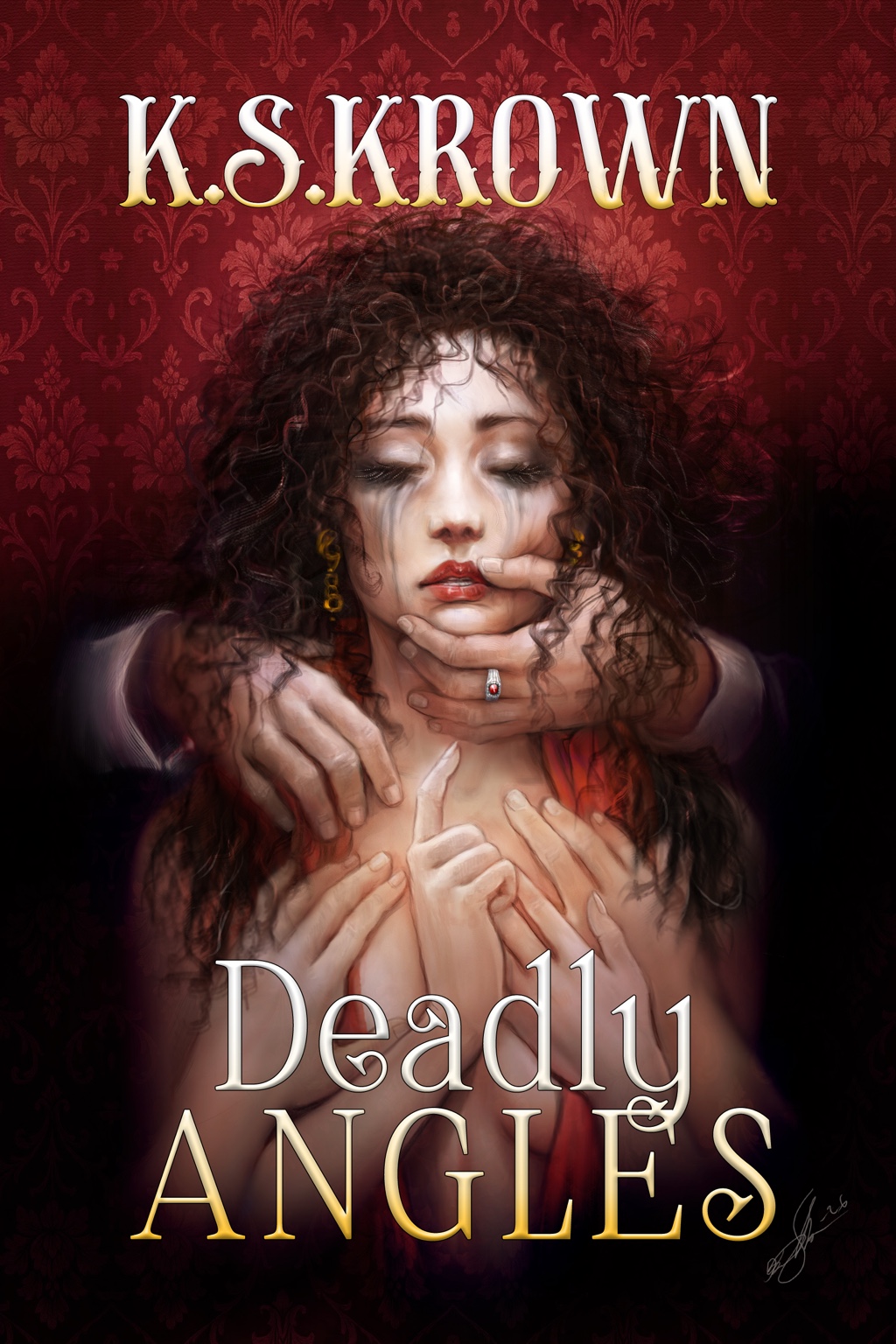
She is the author of The Shop Under The Clock, a Southern Gothic tale of passion, deception, and second chances set beneath the glittering surface of modern Atlanta, and Deadly Angles, a literary psychological thriller examining seduction, betrayal, mortality, and the cost of ambition.
Krown is also the creator of the Devious Demons saga, beginning with Devious Demons and continuing with Angels of London. The series offers a provocative reimagining of the Fall of Man, the angels who defied Heaven, and the woman neither Heaven nor Hell could forget. The saga will continue with Dastardly Deeds and subsequent installments.
Her forthcoming work includes Meade Hall, a historical LGBTQ+ literary novel set in Victorian England that explores forbidden love, class, power, and redemption within the walls of a sprawling country estate. Her expanding fictional world also encompasses The House of DePrez, a Gothic romantic saga of inherited hunger stretching from eighteenth-century France to modern-day Georgia.
Born and raised in Georgia, Krown draws enduring inspiration from the history, contradictions, and haunted beauty of the American South. Before becoming a novelist, she studied biochemistry and molecular biology, earned an MBA in marketing, served in the Georgia Army National Guard, and spent more than fifteen years building a career in corporate marketing. That unusual journey through science, service, strategy, and storytelling continues to shape her fascination with mortality, transformation, identity, and the forces that compel human beings to create—and destroy—the things they love most.
Based in Atlanta, Krown can often be found wandering botanical gardens, studying mythology and philosophy, or disappearing into the imagined worlds of Victorian England, ancient Egypt, and a Heaven far more dangerous than scripture ever revealed.
Her stories remind us that temptation is timeless—and every sin begins with love.
Press & appearances
Author information, book details, and ready-to-use copy for interviews, events, podcasts, and features.
Quick reference
K.S. Krown is an American novelist writing at the collision point of beauty and darkness. Based in Atlanta, she moves between Southern Gothic, psychological suspense, dark romance, paranormal fantasy, and historical fiction, exploring obsession, mortality, and the dangerous space between love and ruin.
For press & booksellers
K.S. Krown is available for podcasts, interviews, readings, book clubs, festivals, literary events, and select appearances—in person and virtually.
Ebooks are free to readers. Paperback and hardcover editions are available for purchase through Amazon and distributed through IngramSpark.
Published by Cool Things To Read, LLCConversation starters
Place, memory & reinvention
K.S. Krown reflects on the city she once dreamed of calling home—and how Atlanta's beauty, contradictions, class divisions, and capacity for reinvention became inseparable from her fiction.
From Midtown and Piedmont Park to the magnolias of the Botanical Garden, Atlanta is more than a setting. It is a living presence in The Shop Under the Clock, Deadly Angles, and the emerging world of The House of DePrez.
Atlanta entered my imagination long before it became my address. I grew up in Georgia a few hours south of the city, but I always wanted to live here. Most of my adult life was spent in Ohio, between Cincinnati—which I still adore; go Bengals!—and the Canton area. Those cities shaped me too, and Cleveland, alongside Atlanta, provided some of the inspiration for the second half of The Shop Under the Clock.
In 2019, I returned to Atlanta for a conference and fell in love with the city. Six months later, I uprooted my life and called it home. It was a chance—a complete reinvention—and the years since have not always been easy. I have faced personal struggles, but Atlanta has carried me through many of them. Its movement, beauty, contradictions, and relentless energy have inspired most of my work outside the Devious Demons saga. That world may belong partly to England, but the Devil will find his way to Georgia eventually.
Midtown is the Atlanta I know most intimately. It feels like my natural rhythm. I walk through Piedmont Park and the Atlanta Botanical Garden, where the landscape changes constantly and new ideas often find me. The Gardens inspire me enormously. I pass the Margaret Mitchell House almost every day, surrounded by modern towers rising above older architecture. That collision between past and present fascinates me—as do the intoxicating scent of magnolia blossoms, the warm evenings, and the sense that the city is always building something new over what came before.
Atlanta and its outer reaches form the backdrop of The Shop Under the Clock. I spent months researching and immersing myself in the life Karen Randall might have lived, while allowing the city and its surrounding communities to shape the novel without revealing too much of what happens there. Deadly Angles draws from Midtown and the wider South in a different way. Two of its three central characters were raised on opposite sides of the class divide, and Atlanta—with its extraordinary wealth existing alongside profound inequality—gave that tension a natural home.
Now The House of DePrez is beginning to absorb Atlanta's warm summer nights as the attraction intensifies between the DePrez brothers and Catherine Anne Boyd. The city lends itself beautifully to that world: old Southern bloodlines beneath modern glass towers, inherited hunger moving through new money, and something dangerous watching from the shadows of Piedmont Park.
My understanding of class is personal. I grew up poor, put myself through school, and kept moving forward. My service in the Georgia Army National Guard and my years as a cadet at Georgia Military College changed the direction of my life. Those experiences taught me discipline, endurance, and how to continue after falling—even when I cannot rise with great intensity at first.
Perhaps that is why reinvention appears so often in my work. I have reinvented myself repeatedly: through education, military service, corporate life, relocation, loss, and now fiction. Atlanta feels like home because it understands reinvention. The city is always becoming something else without entirely surrendering what came before.
And, in many ways, so am I.
Behind the mythology
K.S. Krown discusses how an unfinished 2008 Victorian family saga, a series of profound visions, and a lifelong fascination with faith and free will evolved into Devious Demons.
She explores her provocative reimagining of Eve, the angels who fell with her, and the ancient patterns of love, power, and possession that continue across generations.
The Devious Demons saga began before I understood that I was creating a saga.
In 2008, I started an enormous manuscript called Huddersfield: The Meade Family Saga. It was essentially three stories attempting to occupy one book: a modern-day grandmother preserving her family's history, a ratting mill terrier struggling to survive Victorian Manchester, and the human drama unfolding inside Meade Hall.
The prose was inexperienced and the manuscript became wildly overgrown, but its imagination was already reaching toward the work I would write years later. It contained the Meade family, the mill and estate, enormous disparities between privilege and poverty, forbidden relationships, inherited secrets, and characters struggling against the lives society had chosen for them.
Then, in Midtown Atlanta in 2019, I began experiencing vivid visions and inner conversations with figures I understood as Lucifer, Aonthy, Michael, and Devin. I saw a woman whose face remained extraordinarily clear to me, and I came to understand her as Eve. Gradually, I experienced fragments of the Garden and of a history connecting these figures to her.
Lucifer told me to write their story. I refused.
I said it was not a real story. I said it was not good enough. I made every excuse possible because I could not see how the fragments belonged together. Nevertheless, the story continued emerging until I finally stopped fighting it.
When I returned to the world I had begun with Huddersfield, I discovered that its different histories could be separated without being severed. The intimate historical world expanded into Meade Hall, while the ancient spiritual conflict became the foundation of Devious Demons. Yet the two remained bound together. The Meade family's Victorian history runs through the saga, and the choices made in the Garden continue repeating through their descendants.
In Devious Demons, the Fall is not a finished biblical event. It is a living wound. Lilley's fragmented memories force her to confront competing versions of what happened to Eve, while Lucifer, Aonthy, Michael, and Devin must confront their own love, guilt, jealousy, and responsibility. The question is not merely who tempted Eve. It is who controlled her story afterward—and whether love can mean anything without truth, consent, and free will.
Angels of London widens those consequences. Heaven, Gabriel, Daniel, Victorian London, and the modern world become parts of the same moral history. Ancient choices repeat through human families, relationships, institutions, and generations. The Fall becomes more than humanity's first sin: it becomes a pattern people continue reenacting whenever desire becomes possession and love becomes power.
Last summer, I experienced another profound spiritual conflict. I understood Gabriel to be telling me to stop writing the saga, followed by an experience I understood as God speaking to me. My immediate response was, “It is all I have.”
That period forced me to examine my relationship with the work and with my faith. I eventually found a way forward without abandoning either. It also clarified that I was never writing a simple defense of Lucifer or a conventional battle between good and evil. I was writing about devotion and obsession, beauty and ruin, memory and accountability—and whether redemption remains possible when love has caused irreparable harm.
I did not construct the saga from a conventional outline. Its human foundations had been waiting inside Huddersfield since 2008, while its mythology arrived years later in fragments. I sometimes say that I did not decide to write Devious Demons. I simply stopped resisting the story that had been trying to emerge all along.
History, inheritance & forbidden love
K.S. Krown looks beyond the splendor of Victorian England to the systems of class, gender, inheritance, and ownership beneath—and the forbidden love at the heart of Meade Hall.
Across Meade Hall and the Devious Demons saga, desire passes through generations while masters, servants, men, and women struggle to determine whether love can survive without equal power.
Victorian England seduces me first through its beauty. I am a woman who loves fashion, so of course I imagine myself being dressed for a grand ball, adorned with jewels, and doted upon by a handsome Englishman—my own Mr. Darcy—inside a sprawling country estate. I imagine horseback rides through the English countryside, afternoon walks through immaculate gardens, Hyde Park, and the grandeur of London's West End.
My fascination extends far beyond the Victorian period. I have always loved English history, from the Norman Conquest in 1066 to Geoffrey Chaucer, William Shakespeare, and my favorite monarch, Elizabeth I. England seems to carry its history everywhere. Every estate, cathedral, garden, and London street feels layered with the lives of those who came before.
Yet the beauty is only the surface.
Beneath the clothing, estates, and indulgence existed a world structured by enormous inequalities. Men and women occupied profoundly different positions under law and custom. Property, inheritance, money, and authority remained overwhelmingly in male hands, while women were frequently treated as extensions of the men who controlled their households and futures. Marriage could resemble a business transaction more than a declaration of love.
That contradiction fascinates me: the picture of perfection on the outside while everything crumbles within.
Class divisions shape nearly every relationship in Meade Hall and throughout the Devious Demons saga, whose historical world occupies almost half of each book. Masters and servants may live beneath the same roof, know one another's secrets, and develop intimate emotional bonds, yet an enormous social distance remains between them. I explore that divide through George and Emma in the Devious Demons saga and, even more intimately, through George and Ben Higgins in Meade Hall.
The question beneath both relationships is deceptively simple: Can love exist, thrive, and move forward when two people do not possess equal power?
For Victorian families, inheritance could determine everything. Marriage, reputation, legitimacy, and the production of an heir were essential to preserving wealth and carrying the family name forward. Survival did not merely mean staying alive. It meant ensuring that the estate, bloodline, and social position endured—regardless of the personal cost.
In Meade Hall, desire and power pass through generations of Meade men, from Francis to Senior and eventually to George. The hands change, but the pattern remains: desire first, power second. Each man wants something—or someone—and the power attached to his position determines how he pursues it. Their desires transform their lives, sometimes beautifully and sometimes destructively.
George's relationship with Ben allows me to examine nearly every form of inequality at once. There is the difference in class between master and servant, the difference in age and experience, and, most significantly, the danger surrounding love between two men. George controls many aspects of Ben's life during their early years, yet George also becomes profoundly dependent upon him. He cannot imagine living without Ben.
Ben's position is equally complicated. When opportunities for freedom appear, he cannot simply walk away. Obligation, family, dependence, and love bind him to Meade Hall in ways that no unlocked door can immediately undo. As the novel unfolds, George and Ben eventually begin to create their own form of freedom—not freedom from one another, but freedom together.
That is why Meade Hall could never merely contain LGBTQ+ themes. George and Ben are the novel's DNA. Without them, there is no story. They are two souls connecting, and although the world sees two men divided by class, age, and social law, the emotional center of their story is love, happiness, and, most importantly for Ben, family.
Mary's story reveals a different form of confinement. Victorian women could be exchanged through marriage and dowries to preserve wealth, status, and lineage. Love and companionship were often secondary—if they were considered at all. Meade Hall does not soften the suffering women could endure inside those arrangements. Some of what happens is deeply unpleasant, but the outward image of the perfect wife, perfect marriage, and perfect household often concealed a private reality of isolation, fear, and powerlessness.
The historical Meade family became the foundation from which I built much of the Devious Demons saga. Their world existed first, and weaving them into the saga felt natural because the same emotional conflicts repeat across centuries. The clothing and laws may change, but questions of gender, class, ownership, ambition, and equality remain painfully recognizable. Even now, women continue to confront unequal pay, lost opportunities, and systems in which authority does not fall evenly.
At its core, I think of redemption as a kind of buying back—recovering or saving something that has been damaged, surrendered, or taken away. It resembles the scales of justice moving endlessly back and forth, searching for balance without ever settling perfectly upon the fulcrum.
Perhaps redemption is not the moment when those scales finally become still.
Perhaps it begins when we recognize what power has taken—and decide what must be returned.
Access, discovery & readership
K.S. Krown explains why every ebook in her catalog is free—and how removing the cost gives readers an open door into unfamiliar, challenging, and beautifully dangerous worlds.
Free access invites readers to discover a new voice without hesitation, engage with difficult questions, and decide for themselves whether they want to continue the journey.
As an emerging author, I understand that asking readers to enter an unfamiliar world—and trust the person who created it—is asking them to take a chance. Discoverability matters. Visibility matters. Building the K.S. Krown name matters. But before any of that can happen, readers need an open door.
That is why I have made every K.S. Krown ebook free across Amazon, Kobo, Barnes & Noble, Apple Books, and Google Play. Removing the cost removes one reason to hesitate. Readers can choose a story, experience my work, and decide for themselves whether they want to continue the journey.
My purpose extends beyond attracting an audience. I want to engage people's minds and invite them to sit with subjects that may be uncomfortable, yet necessary. Whether I am reimagining the Garden of Eden or exploring obsession, desire, class, and unequal power, my stories ask what happens when love crosses the boundary between devotion and possession.
Free access allows more readers to approach those questions—and follow my characters to the very edge of Heaven and Hell.
Press · appearances · rights
K.S. Krown welcomes inquiries regarding interviews, podcasts, readings, book clubs, festivals, literary events, rights, and select appearances—in person and virtually.
Reader messages are welcome, too.contact.kskrown@gmail.com ↗